
Seeing Every Student: How Dr. Elizabeth Pierre Shapes Counselors at North Park University
| 6 Min Read
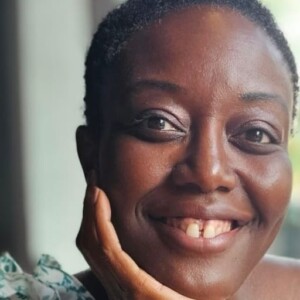
Dr. Elizabeth Adepoju-Pierre did not choose counseling because it seemed like a practical career path. She chose it because of a conviction she has carried since childhood: every person deserves to feel seen and heard. As an associate professor in the online Master of Arts in Clinical Mental Health Counseling program at North Park University’s School of Professional Studies, she brings that conviction into every lecture, every check-in, and every feedback video she records for her students.
The daughter of Haitian immigrants, Dr. Pierre grew up listening to stories of struggle and resilience. That upbringing drew her early to people on the margins, and it continues to shape how she shows up in the classroom today.
“From that place, I decided: I never want anyone to feel unseen or unheard in my presence,” she says. That commitment extends equally to her students and to the clients they will one day serve.
A Small Cohort, a Genuine Community
North Park’s online MA in Clinical Mental Health Counseling program enrolls cohorts of 12 to 15 students, a deliberate and defining feature. From the interview process forward, students build relationships with the classmates they will move through the program alongside. The closeness does not disappear in an online format. Dr. Pierre has designed her courses to ensure it cannot.
Twice per semester, she holds individual check-ins that go well beyond academics. Live group sessions and video discussion boards replicate the energy of a physical classroom. In her trauma course, students pair up to watch and discuss the film Crash in a podcast-style format, drawing out their whole selves in the process. Dr. Pierre responds personally, often with a video of her own.
“It’s not just them alone with a computer,” she says. “They’re genuinely connected with people throughout the whole experience.”
Student connection is central to what the program is ultimately preparing them to do. The first question running through every course, regardless of subject, is whether the student themselves is well. In counseling, Dr. Pierre reminds her students; the therapist is the instrument. That means examining biases, understanding countertransference, and building the kind of self-awareness that separates a technically competent clinician from a truly effective one.
Growing Into Your Own “Special Sauce”
The growth Dr. Pierre most loves to witness has nothing to do with mastering a specific technique. It happens when a student starts to trust themselves. She has watched it happen again and again: a student who came in uncertain, tentative, and a little afraid, gradually discovering that what makes them unique is exactly what makes them an effective therapist.
“Each of you has a special sauce,” she tells her students. “The best therapist, not the perfect therapist, but the best, is the one who fully embraces who they are.”
That philosophy also shapes how Dr. Pierre teaches. She is willing to model imperfection, to apologize when she gets something wrong, and to show up as her authentic, unfinished self. When a therapist performs rather than genuinely shows up, she notes, the unspoken message to the room is that everyone else must perform too. She refuses to create that environment, and she asks her students to carry the same standard into their own practice.
Career readiness is woven directly into that developmental work. Graduates of the program are equipped to pursue licensure as professional counselors, working in clinical settings that include community mental health centers, hospitals, private practice, and school-based programs. The rigorous curriculum paired with the program’s intimate cohort model means students don’t just arrive at graduation with credentials. They arrive knowing how to be a counselor.
Faith, Meaning, and an Open Door for Everyone
For prospective students who hear “faith-based counseling program” and hesitate, Dr. Pierre’s answer is immediate: You are welcome here.
She teaches a course on integrating spiritual and religious concerns in therapy, using Toni Morrison’s The Bluest Eye alongside traditional clinical texts. The course is not about promoting any particular faith tradition. It is about meaning-making, purpose, and the questions that arise in every therapy room, regardless of anyone’s formal beliefs.
“Whether you’re an atheist, agnostic, or someone with a deep faith tradition, you have something to offer, and we can all learn from each other,” she says.
She begins every semester by asking students to name their fears about the course. The practice models the same vulnerability she will eventually ask them to hold space for in their clients. In all her years of teaching, she says, that act of naming has prevented conflict before it starts.
The practice is a small example of something larger. Dr. Pierre’s ability to hold space for everyone in the room is not incidental. Both qualities are rooted in who she is, and they are what make her, and a program shaped in her image, genuinely worth considering.
“You get the brains, the heart, and the embodiment, even in an online format,” she says of North Park’s program. “My colleagues are sharp clinical and academic minds who also genuinely care.”
In a small cohort, guided by faculty like Dr. Pierre, students do not simply learn how to counsel. They learn how to be fully and authentically, with enough self-knowledge to hold space for whoever walks through their door.
About the Master of Arts in Clinical Mental Health Counseling at North Park University
North Park University’s online MA in Clinical Mental Health Counseling is designed for working adults who are ready to build a meaningful career in mental health. The program combines rigorous clinical training with North Park’s distinctive commitment to the whole person, preparing graduates to pursue licensure and practice in a wide range of professional settings.
Program highlights include:
- Cohort model with 12 to 15 students for close-knit, sustained peer relationships
- Online delivery with live, interactive sessions that replicate in-person engagement
- Faculty who are both active clinicians and dedicated educators
- Curriculum that integrates trauma-informed care, multicultural competency, and self-development alongside clinical technique
- Coursework on integrating spiritual and religious concerns in therapy, open to students of all backgrounds and belief systems
- Preparation for clinical licensure and careers in community mental health, private practice, hospital settings, and more
- North Park University is ranked No. 54 among Best Regional Universities in the Midwest by U.S. News & World Report (2026) and recognized as No. 6 among Top Performers on Social Mobility in the same category. The School of Professional Studies has been recognized among the Best Online Colleges in Illinois by Forbes.
- North Park University is accredited by the Higher Learning Commission. To learn more about the MA in Clinical Mental Health Counseling, visit degree.northpark.edu or call (888) 439-0683.